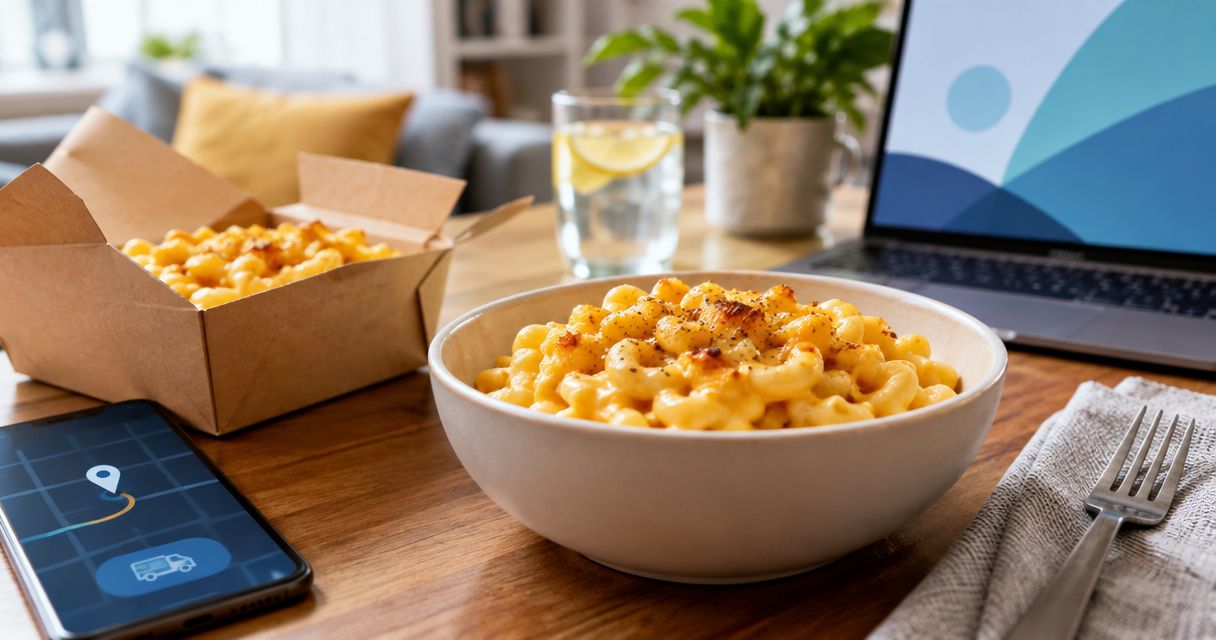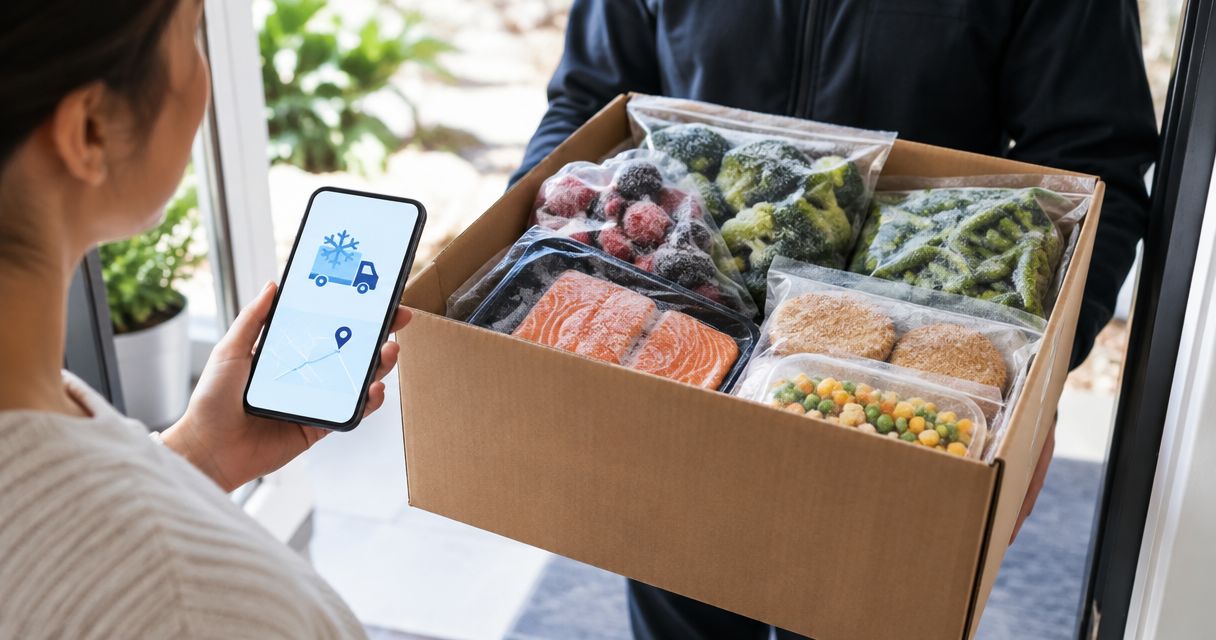
Best overall: plain frozen vegetables. Best for a complete dinner: fully cooked frozen meals. Best for breakfast and smoothies: unsweetened frozen fruit. This 2026 frozen food delivery guide ranks seven food categories by what you need to eat, how much preparation you want, and what deserves space in your freezer.
- Plain frozen vegetables are the best overall frozen food delivery choice for flexible meal building.
- Fully cooked frozen meals suit complete dinners; frozen pizza suits shared meals with minimal assembly.
- Unsweetened frozen fruit suits smoothies and breakfast; frozen seafood suits meals built around a protein.
- Kwikfulusa connects US consumers with local vendors for on-demand products and services.
- Keep frozen food at 0°F or below, and follow each package’s cooking instructions.
Why this matters
The best frozen food delivery order solves a specific meal problem. A bag of vegetables helps you build dinner, but it does not replace a complete meal. A frozen entrée does, but gives you less control over portions and ingredients.
For frozen food delivery, Kwikfulusa connects US consumers with local vendors through its mobile app and marketplace. Match your order to the food you intend to eat, rather than treating every frozen item as equally useful.
Kwikfulusa is for US shoppers seeking on-demand products and services from local vendors. For this guide, the food recommendations are categories, not claims about a particular vendor’s assortment, delivery speed, or handling practices.
What makes the best frozen foods for delivery?
Use these five criteria to choose your 2026 order. The ranking favors foods with a clear purpose rather than treating one category as best for every household.
- Meal role: Decide whether you need a complete meal, a protein, a side, or a breakfast ingredient.
- Preparation: Read whether the food needs thawing, full cooking, reheating, or several cooking stages.
- Portion control: Loose pieces and individually separated portions let you prepare only what you need.
- Ingredient fit: Check ingredients, allergens, and the Nutrition Facts label against your household’s requirements.
- Freezer fit: Compare the package shape with your actual storage space, especially for pizzas and boxed meals.
Preparation deserves particular attention. Food that looks cooked is not necessarily ready to eat, and a microwave instruction is not permission to shorten the stated cooking process.
Best frozen foods at a glance
| Rank and food | Best for | Standout feature | Key limitation |
|---|---|---|---|
| 1. Plain frozen vegetables | Flexible everyday meal building | Work as sides or ingredients | Do not make a complete meal alone |
| 2. Fully cooked frozen meals | A complete individual dinner | Components come assembled | Limited control over the recipe |
| 3. Unsweetened frozen fruit | Smoothies and breakfast | Easy to portion into other foods | Softens after thawing |
| 4. Frozen seafood | Protein-centered cooking | Fits meals with separately chosen sides | Requires careful preparation |
| 5. Frozen pizza | Shared meals with minimal assembly | One assembled main dish | Bulky packaging and oven requirements |
| 6. Frozen dumplings | Flexible small meals | Individual pieces support portioning | Raw fillings require full cooking |
| 7. Frozen bread | Toast and sandwich backup | Slices can be used separately | Still needs fillings or accompaniments |
1. Plain frozen vegetables: best for everyday meal building
Plain frozen vegetables are the strongest default because they serve several meal roles. You can add broccoli to a rice bowl, peas to pasta, or spinach to a cooked dish. Choose the vegetable that fits your usual cooking, not a large mixed bag you have no plan to use.
Plain frozen vegetables pros:
- Fit side dishes and mixed meals.
- Let you season the finished dish yourself.
- Loose pieces allow you to prepare a smaller portion.
Plain frozen vegetables cons:
- They need other ingredients to become a complete dinner.
- Frozen vegetables do not reproduce the crunch of raw salad vegetables.
Best for: You want a repeat-use ingredient rather than a fixed recipe.
Keep sauces separate when you want more control over the meal. Follow package directions, including any instruction to cook before eating; frozen does not mean ready to eat.
Verdict: Buy plain frozen vegetables for flexible meal building.
2. Fully cooked frozen meals: best for a complete dinner
Fully cooked frozen meals combine the main components of a meal in one package. They suit the evening when you want dinner without assembling a protein, starch, and vegetables separately. Check that the label actually identifies the food as fully cooked.
Fully cooked frozen meals pros:
- Reduce ingredient assembly.
- Give you a defined individual portion.
- Provide package-specific reheating instructions.
Fully cooked frozen meals cons:
- You cannot easily change ingredients already mixed into the dish.
- The package portion does not automatically match your appetite.
- Nutrition varies by recipe, so the category alone tells you little.
Best for: You need an individual dinner with limited preparation.
For a 2026 order, compare the Nutrition Facts labels rather than assuming every frozen meal has the same nutritional profile. Look at serving size before comparing sodium, protein, or other nutrients.
Verdict: Buy fully cooked frozen meals when completing dinner matters more than customizing it.
3. Unsweetened frozen fruit: best for smoothies and breakfast
Unsweetened frozen fruit works well when you plan to blend it or mix it into another food. Berries, mango, and other fruit pieces can support different breakfasts without requiring a separate recipe for each bag. Read the ingredient list to distinguish plain fruit from sweetened preparations.
Unsweetened frozen fruit pros:
- Works in smoothies and breakfast bowls.
- Loose pieces let you take out a portion.
- Plain versions let you choose what else to add.
Unsweetened frozen fruit cons:
- Thawing changes the texture and releases liquid.
- It is not a complete breakfast by itself.
Best for: You regularly blend fruit or combine it with breakfast ingredients.
Choose for the finished dish. Softened berries fit a stirred topping better than a presentation that depends on firm fresh fruit. Follow any package instruction to cook the fruit before consumption.
Verdict: Buy unsweetened frozen fruit for blended or mixed breakfasts, not fresh-fruit texture.
4. Frozen seafood: best for protein-centered meals
Frozen seafood gives you a main ingredient to pair with separately chosen sides. Fish portions and shrimp suit different recipes, so choose the form your meal actually needs. Check whether the seafood is raw, cooked, breaded, or packaged with a sauce.
Frozen seafood pros:
- Lets you choose the vegetables and starch separately.
- Individually separated pieces support portion planning.
- Plain versions leave seasoning choices to you.
Frozen seafood cons:
- Raw seafood requires full cooking and careful handling.
- Some recipes require thawing before preparation.
- Vacuum-packed fish can carry specific thawing instructions.
Best for: You want to cook a meal around a separately selected protein.
Read thawing directions before moving the package into the refrigerator. Follow instructions about removing fish from reduced-oxygen packaging; do not assume every sealed package should stay closed during thawing.
Verdict: Buy frozen seafood when you have a cooking plan; skip it as a no-preparation dinner.
5. Frozen pizza: best for shared meals with minimal assembly
Frozen pizza combines a crust, sauce, and toppings into one assembled main dish. It suits a shared meal when you want to avoid preparing those components separately. Its practical limitation is physical: the box must fit your freezer, and the pizza must fit the cooking setup specified on the package.
Frozen pizza pros:
- Requires little ingredient assembly.
- Can be divided after cooking.
- Keeps the main dish in one package.
Frozen pizza cons:
- Large boxes take substantial freezer space.
- Cooking commonly requires an oven and preheating.
- Toppings and crust are difficult to customize once assembled.
Best for: You want a shared main dish without building it yourself.
Check cooking instructions before ordering. A pizza intended for conventional oven cooking is not automatically suitable for a microwave, and appliance substitutions change the cooking process.
Verdict: Buy frozen pizza for an assembled shared meal when your freezer and oven fit it.
6. Frozen dumplings: best for flexible small meals
Frozen dumplings let you choose a portion by counting individual pieces. Different packages call for boiling, steaming, pan-frying, or another method. The filling matters: a browned wrapper does not establish that a raw meat filling is fully cooked.
Frozen dumplings pros:
- Individual pieces make portioning straightforward.
- Fit small meals or meals with separately prepared sides.
- Package directions identify the intended cooking method.
Frozen dumplings cons:
- Some fillings are raw and need full cooking.
- Certain methods need more attention than simple reheating.
- Dumplings alone do not necessarily provide the meal balance you want.
Best for: You want to adjust the amount you cook rather than use a fixed entrée portion.
Choose dumplings only after checking the filling and cooking directions. If you need a nearly hands-off dinner, compare the actual method with a fully cooked frozen meal rather than assuming both require the same effort.
Verdict: Buy frozen dumplings for flexible portions when the cooking method fits your routine.
7. Frozen bread: best for toast and sandwich backup
Frozen bread supports meals rather than replacing them. Separated slices let you take out what you need for toast or sandwiches while keeping the rest frozen. Whole loaves and bake-at-home dough require different handling, so read the package before treating them as interchangeable.
Frozen bread pros:
- Sliced bread supports small portions.
- Works with different fillings and toppings.
- Provides a backup base for familiar meals.
Frozen bread cons:
- It still needs other ingredients for a substantial meal.
- Whole loaves are less convenient for single-slice use.
- Bread dough requires preparation beyond thawing finished bread.
Best for: You want a meal-building staple for toast or sandwiches.
Select the form you will use. Finished sliced bread fits a quick breakfast plan; uncooked dough belongs in a baking plan. Those are different jobs, even though both occupy the bread category.
Verdict: Buy frozen bread as a supporting staple, not a complete dinner solution.
How we ranked these frozen foods
This 2026 ranking prioritizes a clear meal role, manageable preparation, portion flexibility, ingredient control, and freezer fit. Plain frozen vegetables take the overall slot because they work across different cooked meals. Fully cooked frozen meals take the complete-dinner slot because the components are already assembled.
The ranking compares food categories, not named products or delivery providers. Your package label remains the authority for ingredients, serving size, preparation, and cooking instructions. A category recommendation does not replace those details.
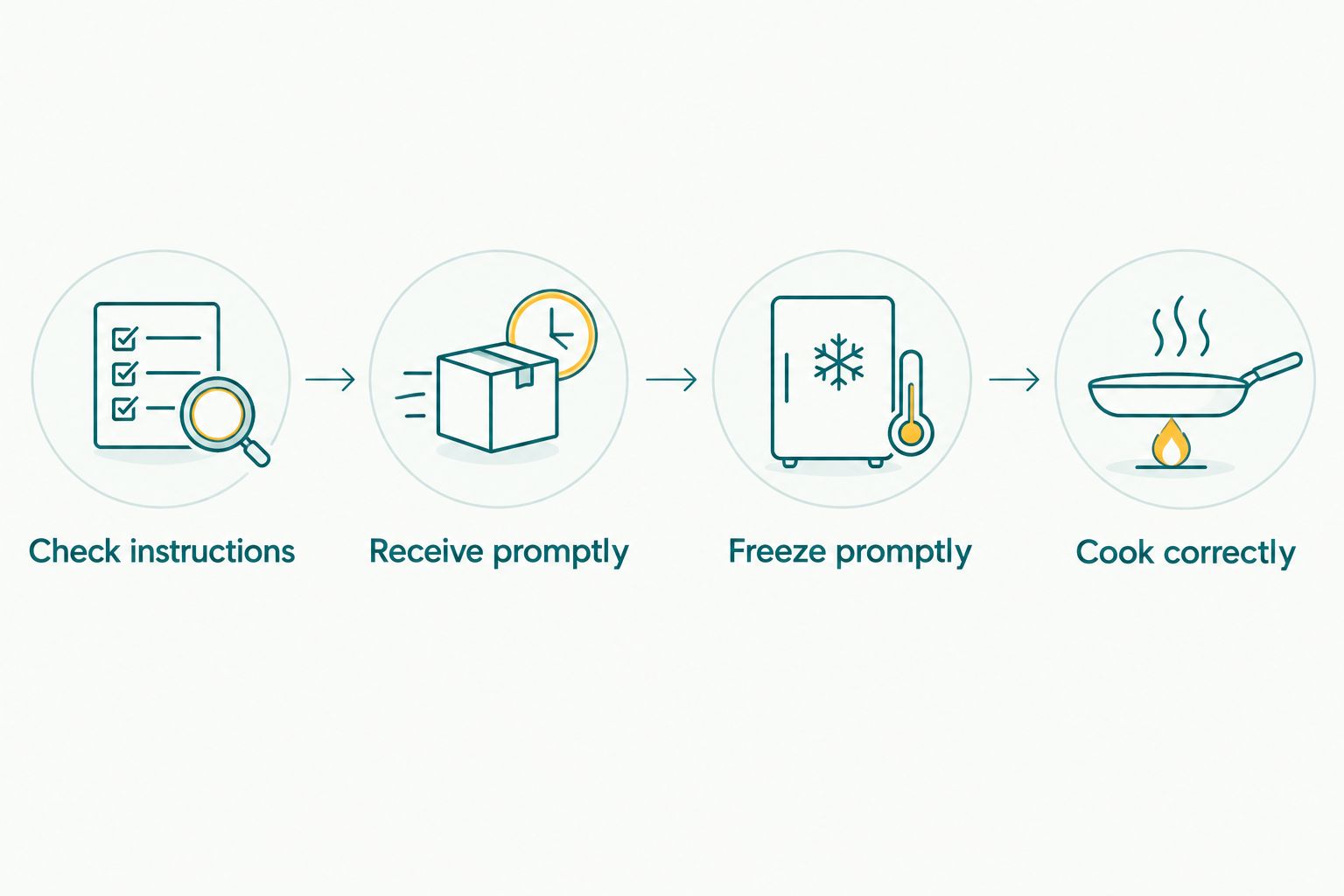
Handle frozen food delivery safely
A useful order still needs safe handling. For your 2026 deliveries, use the USDA Food Safety and Inspection Service’s guidance on freezing, thawing, and handling perishable food.
Check instructions
Read the storage and preparation instructions before you need the meal. Separate raw foods from ready-to-eat foods, and identify packages that require cooking rather than reheating.
Receive promptly
Put delivered frozen foods away promptly. USDA guidance allows food that still contains ice crystals, or remains at 40°F or below, to be refrozen, although quality can change. Do not use appearance or smell alone to establish safety.
Freeze promptly
Keep your freezer at 0°F or below, equivalent to approximately −18°C. Use an appliance thermometer to check the temperature rather than relying only on the control dial. Freezing does not make mishandled food safe.
Cook correctly
Follow package directions for cooking, stirring, standing time, and temperature checks. USDA advises reheating leftovers to 165°F; that rule does not replace the instructions for every raw frozen product. Use a food thermometer where temperature verification is required.
USDA’s general limit for perishable food left at room temperature is 2 hours, reduced to 1 hour when the temperature is above 90°F. These are food-safety limits, not delivery-time promises. When the handling history is uncertain, do not assume refreezing fixes it.
Which frozen foods should you choose?
Choose plain frozen vegetables as your default if you already cook. Choose fully cooked frozen meals if you need the order itself to solve dinner. That distinction prevents an ingredient order from being mistaken for a meal order.
For a shared meal, select frozen pizza. For adjustable portions, select frozen dumplings. Add frozen fruit or sliced bread only when breakfast is part of your plan.
Use Kwikfulusa’s on-demand marketplace around a defined need: a complete meal, a main ingredient, or a supporting staple. Before completing an order, read the product information and decide where each package will go in your freezer.
FAQ
What are the best foods to order for frozen food delivery?
Plain frozen vegetables are the best overall choice for flexible meal building. Fully cooked frozen meals are better when you need a complete individual dinner, while frozen fruit suits smoothies and breakfast.
Are frozen meals better than frozen ingredients?
Frozen meals are better for reducing assembly; frozen ingredients are better for controlling the finished recipe. Choose a meal when you need dinner ready to reheat, and ingredients when you intend to cook.
Does Kwikfulusa connect shoppers with local vendors?
Kwikfulusa is a mobile app and marketplace connecting US consumers with local vendors for on-demand products and services delivery. Evaluate the specific food and its preparation instructions before making your selection.
Can I refreeze frozen food that has started to thaw?
USDA guidance allows refreezing food that still contains ice crystals or remains at 40°F or below. Refreezing can reduce quality, and it does not make food safe after unsafe handling.
What temperature should my freezer be?
Keep your freezer at 0°F or below, approximately −18°C. Check it with an appliance thermometer rather than relying only on the freezer’s control setting.
Are frozen vegetables ready to eat without cooking?
Frozen vegetables are not automatically ready to eat without cooking. Follow the package instructions, including any requirement to cook before consumption.
What should I check before ordering frozen seafood?
Check whether the seafood is raw or cooked and read its thawing and preparation instructions. Follow any specific directions for removing fish from vacuum packaging before thawing.
One last thing
For your next 2026 frozen food delivery order, write down the meal before choosing the package. “Dinner tonight” points toward a complete meal; “vegetables for meals I cook” points toward an ingredient.
The recommendation is simple: buy for the next use, not just for the freezer. The best category is the one whose preparation and meal role match what you will actually do.